Serena Williams Ignites Debate Over Athletes Taking GLP-1s
The tennis champion’s successful return to the sport has left the internet divided.

NurPhoto/Getty Images
Serena Williams’ triumphant return to competitive tennis has reignited a surprisingly thorny debate that stretches far beyond the court: Are GLP-1 weight-loss drugs giving athletes an unfair edge?
The 23-time Grand Slam champion returned to the court earlier this month at the Queen’s Club Championship for her first doubles competition in nearly four years, teaming up with 19-year-old Canadian doubles partner Victoria Mboko for a convincing win.
The 44-year-old’s performance immediately drew attention online, with some critics questioning whether her public use of the weight-loss drug tirzepatide could provide an athletic advantage.

Serena Williams poses for an ad campaign by telehealth firm Ro for GLP-1 weight-loss medicines.
Ro/via REUTERS
Williams announced her new role as a spokesperson for Ro, a telehealth company that prescribes GLP-11, in August 2025 with a sponsored Instagram post.
The debate arrives as GLP-1 medications continue their meteoric rise in popularity.
Sign up to receive news and updates from The Looker
By clicking “Sign Up” you agree to our Terms of Use and Privacy Policy.
Roughly 1 in 8 Americans report using the drugs after the FDA approved Wegovy for obesity treatment in 2021. While originally developed to treat Type 2 diabetes, the medications have become widely used for weight loss.

The World Anti-Doping Agency (WADA), which oversees prohibited substances for most international sports, has not banned GLP-1 medications. However, the organization added the drugs to its monitoring program in 2024, signaling that officials are keeping a close eye on their growing use among athletes.

After dropping over 30 lbs, Williams secured a doubles win at the Queen’s Club tournament alongside Victoria Mboko.
Andrew Couldridge/Action Images via Reuters
Williams herself has credited tirzepatide with helping her lose more than 30 pounds after having two children.
The tennis icon told USA Today last year that the medication “definitely had an effect on maybe some wins that I could have had in my career.”
She also told People that it helped “enhance everything that I was already doing—eating healthy and working out, whether it was as a professional athlete at the top level of tennis or just going to the gym every day.”
Still, many experts remain unconvinced that Williams’ stunning results translate into a substantial performance-enhancing edge.

Thomas Hudzik, a pharmaceutical consultant who serves on a WADA advisory group that helps evaluate substances for potential bans, dismissed the idea that the medications provide a meaningful competitive boost.
“I can’t see that there would be much of an advantage at all to using these substances in an athlete,” Hudzik told The Atlantic.

Dr. Jessica Lovato, a double board-certified physician specializing in obesity medicine and general surgery at Banner Health, went even further.
“I would not agree that GLP-1s enhance sports performance at all,” Lovato said.
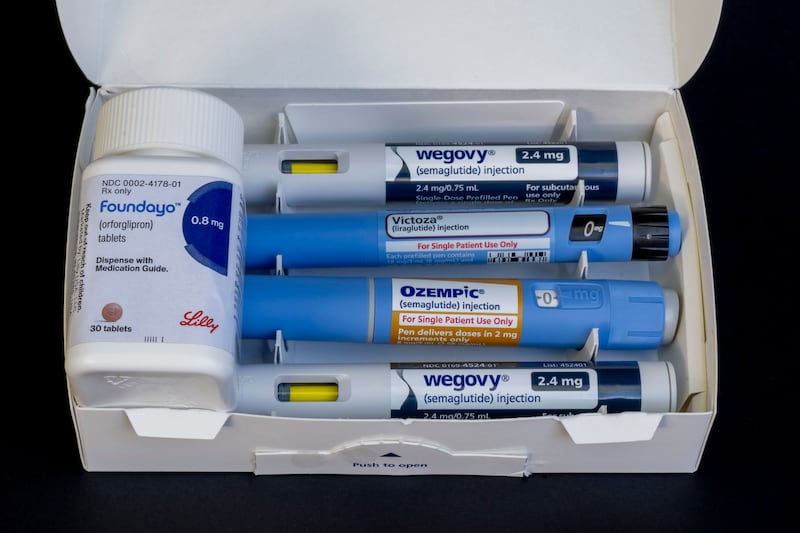
GLP-1 use skyrocketed in 2021 after the FDA approved Wegovy to treat obesity.
UCG/UCG/Universal Images Group via G
She noted that common side effects—including nausea, reduced appetite, and difficulty consuming enough calories and protein—can make it harder, not easier, for athletes to maintain muscle mass and strength.
“We have a population of patients who come in who are powerlifters or play league sports,” Lovato explained. “We see a lot of them come back saying that their performance has decreased. They feel weaker and more tired.”
Rapid weight loss itself can also reduce lean muscle mass, regardless of whether it is achieved through GLP-1 medications.

Doctors warn rapid weight loss from GLP-1 use could hinder athletes ability to maintain muscle mass needed for peak athletic performance.
Fabrizio Bensch/REUTERS
Still, some experts see potential reasons for concern.
Lars Engebretsen, head of WADA’s Health, Medical and Research Committee, previously told Norway’s public broadcaster that he believes the drugs deserve closer scrutiny, citing concerns about their potential impact on eating disorders.
Other physicians have argued that substantial reductions in body weight could benefit competitors in sports like wrestling where endurance, speed, or weight-class play a major role.
“GLP-1s can significantly reduce body weight and body fat, which could theoretically benefit athletes in sports where power-to-weight ratio, endurance efficiency, speed or weight-class requirements are important,” Dr. Paul Gross told the New York Post.

Medical experts are left divided on whether or not GLP-1 medications should be considered performance enhancing drugs in sports.
LEE SMITH/REUTERS
WADA considers three factors when determining whether a substance should be prohibited: its potential to enhance performance, potential health risks, and whether it violates what the agency calls the “spirit of sport.”
Online debate over Williams’ comeback reflected that uncertainty.
One online commenter argued there is still little evidence that GLP-1 drugs meet WADA’s standards for a ban, while another self-described powerlifter said athletes they knew who used the medications “had a negative impact on their strength and made training a bit harder.”

Unlock a year of full access to The Looker and The Daily Beast for $35.
Monthly
$1
First month then $5.99/month
Annual
$35
First year then $59.99/year
Ad-Free
$79
First year then $119.99/year
Looks like you already have a subscription!
You're all set!
Thanks for subscribing.
Register below to read this article for free or subscribe
to unlock unlimited access to The Looker and The Daily Beast.
Monthly
$1
First month then $5.99/month
Annual
$35
First year then $59.99/year
Ad-Free
$79
First year then $119.99/year
Already have an account? Sign In
Looks like you already have a subscription!
You're all set!
Thanks for subscribing.
Sign in
Login dialog
Sign in or create an account
Login dialog
Loading comments…