Flu Season Is Already Brutal, and Experts Think the Worst Is Yet to Come
Is everyone sick right now?

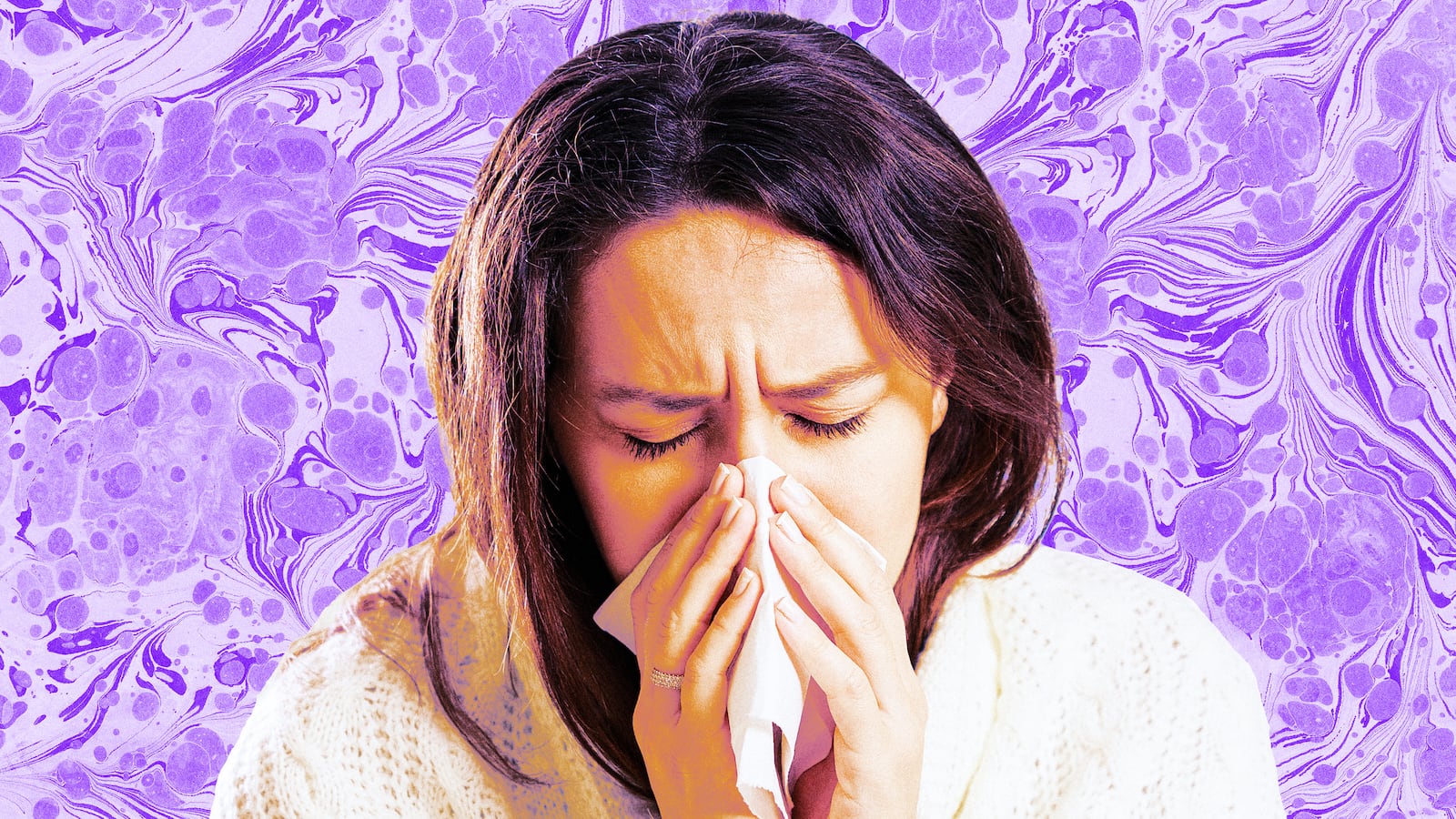
Photo Illustration by Thomas Levinson/The Daily Beast/Getty
If you’ve noticed a surge of sick colleagues and friends who seem to be afflicted by the flu, you’re not alone.
On Instagram, the #fluseason hashtag has racked up more than 449k posts. At the same time, anecdotal observations across Substack, TikTok, and Reddit suggest an unfortunate reality: the current flu season is more ferocious than usual.
“[Flu season] tends to peak in January and February, so I think the worst is probably still ahead of us,” says Dr. Laura Steelman, a board-certified pediatrician based in Florida.
Official numbers appear to confirm the anecdotal evidence: data from the Centers for Disease Control and Prevention (CDC) indicate that positive flu test results this week were up 32.9%, with most of the country already experiencing “high” or “very high” levels of flu activity. The CDC estimates that 120,000 hospitalizations and 5,000 deaths from flu have occurred so far this season, and a record number of healthcare provider visits are attributed to the flu.
But what’s behind the rapid climb? And how can you protect yourself during such a brutal flu season?
Get a First Look
Sign up to receive news and updates from The Looker
By clicking "Sign Up" you agree to our Terms of Use and Privacy Policy.
Why does the 2025–2026 flu season seem so bad?
“Each year, when we have a flu season, we do see a predominant strain that is circulating, so it’s not unusual to see something like the subclade K being so dominant,” Dr. Richard Martinello, a board-certified infectious disease doctor at Yale Medicine, told The Looker. “Still, this is certainly a more severe flu season than what we would typically see.”
A subclade is a small, distinct evolutionary branch of a virus and is used to identify variants of diseases, such as influenza.
While the ferocity of this flu season has some people calling the current variant a “superflu,” it’s important to note that this is not an official term. The variant’s medical designation is “subclade K.”
Getty Images
Martinello explains that there are four types of flu: A, B, C, and D, with A and B causing the seasonal flu we (woefully) experience each year. “Within A, the two common types are H3N2 and H1N1. But those types are constantly evolving,” he says. Subclade K is an evolution of that H3N2 lineage.
“So far, [we have seen that] the overwhelming majority of the flu that’s been identified is the subtype A, H3N2. Of that, about 90% has been the subclade K,” explains Martinello.
Martinello says that some of this could be due to fewer vaccinations—even a few percentage points down from past years could be enough to make for a more severe flu season.
The fact that this is an H3N2 strain could also be making people feel sicker. “We do see somewhat more severe years when an H3N2 is dominant,” he says.
Between the anxiety-inducing scientific names for variants and the flurry of data points, you may feel worried. (Early COVID-19 confusion has had an enduring effect on our psyches, after all.) Fortunately, Martinello insists that while this is a bad flu season, it still falls within the normal range.
Is it even worthwhile to get this year’s flu vaccine?
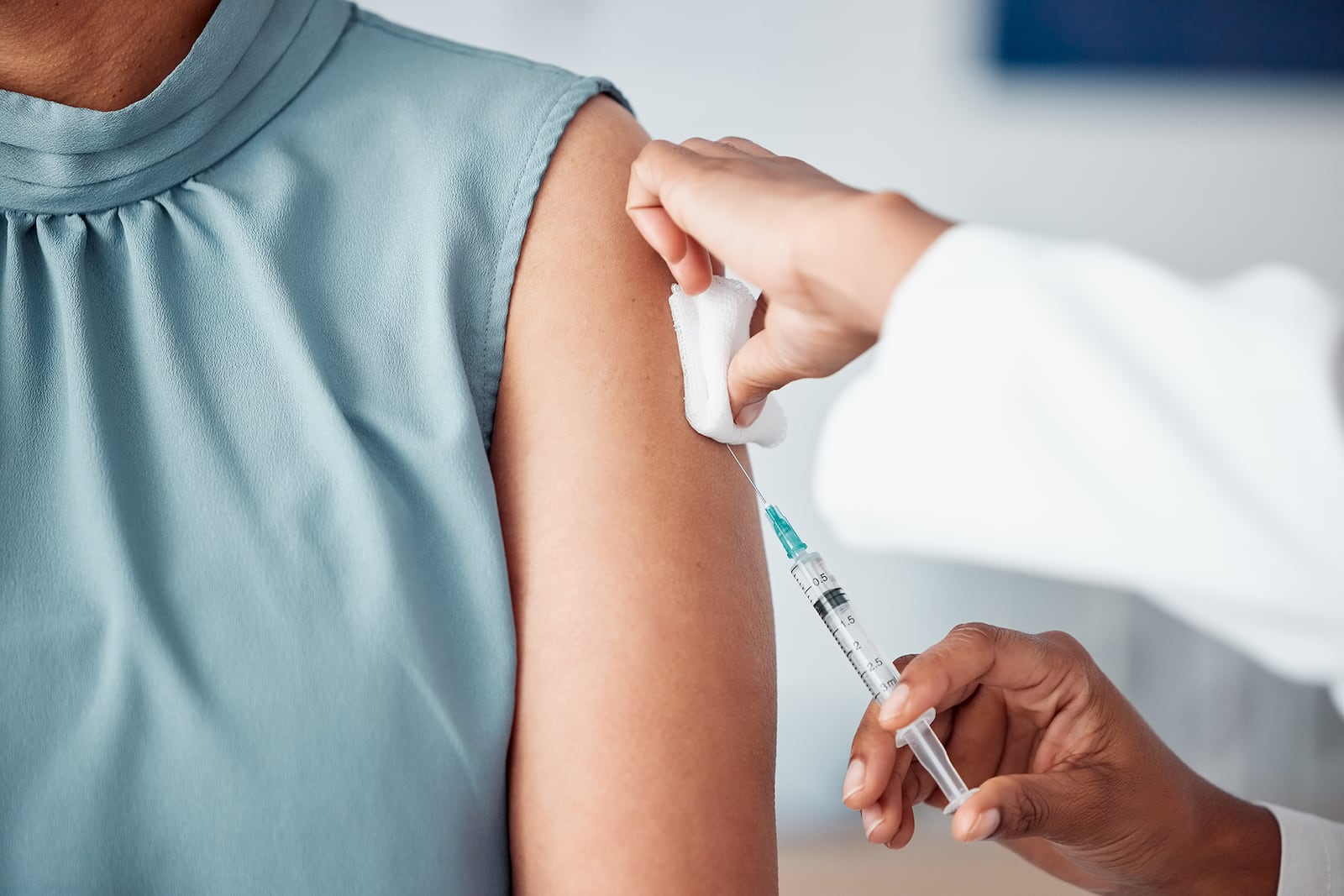
To put it simply: yes, it is worthwhile, and yes, you should get it ASAP.
“It’s not unusual for that match [between the vaccine and the predominant virus going around] to be less than perfect,” says Martinello, but people who get vaccinated tend to experience less severe cases of flu if they do get sick, he says. They also go to the emergency room less frequently, have lower hospitalization rates, and even die from the flu less often than those who do not get the vaccine.
The current vaccine was meant to tackle the H3N2 subclade J strain that was circulating at the time of vaccine development. Since then, subclade K has taken over, leading some people to believe the vaccine won’t “cover” the currently circulating flu strain. But Martinello warns that this is an inaccurate conclusion.
Some protection—even if the flu-strain match is imperfect—is better than no protection, says Martinello. “If somebody’s not vaccinated yet, they should run out and get vaccinated.”
Steelman adds that in her practice, it’s not uncommon to see just how effective the flu shot can be when you have a family of mixed vaccination status, where one child has a flu shot, and another doesn’t. The entire family will get the flu, but “almost always,” the unvaccinated child will feel worse and be sick for two or three days longer. The vaccinated child might still have symptoms, but they’ll be less severe and resolve more quickly.
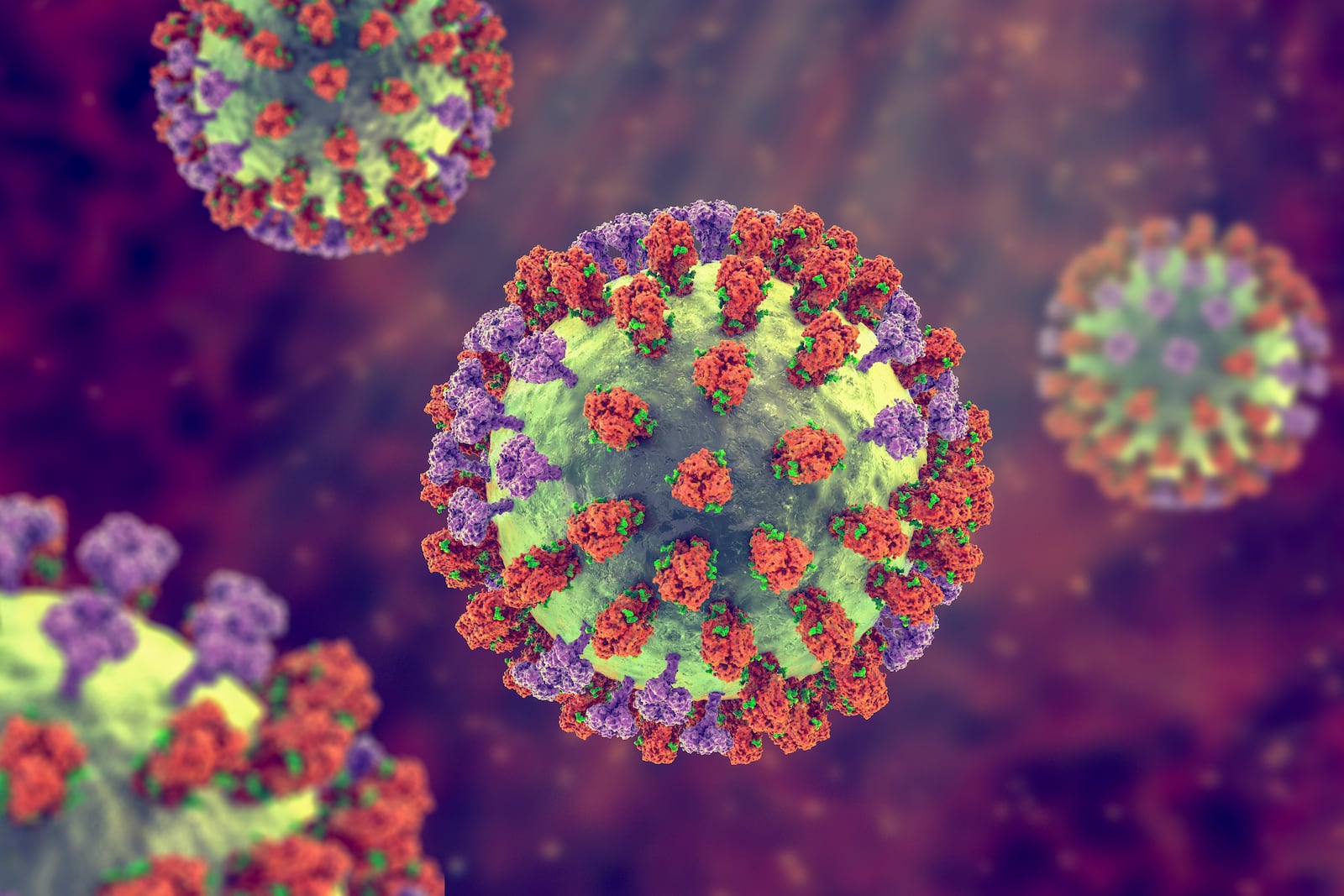
The subclade K variant of the influenza virus is sweeping across the U.S.
KATERYNA KON/SCIENCE PHOTO LIBRA/Getty Images/Science Photo Library
What to do if you catch the flu
Subclade K doesn’t have any unique identifiers beyond the usual flu symptoms. These include a scratchy, sore throat, fever, a dry cough, body aches, and headaches.
The “classic” case, Martinello says, would be a rapid onset where someone goes from feeling fine to realizing they’re sick over the course of a few hours.
If you suspect you may have the flu, Martinello recommends getting tested to confirm your diagnosis. There are also at-home tests that differentiate between Influenza A, Influenza B, and COVID-19 available at pharmacies, if you want results quickly.
“The reason I [recommend getting tested] is that if somebody has the flu, we have good medications to treat those individuals,” he says, adding that antiviral flu medications like Xofluza and Tamiflu are most effective when used early.
Treating the flu is even more critical if you have risk factors that could make it worse, such as being pregnant, obese, having diabetes, or other chronic illnesses.
Getty Images
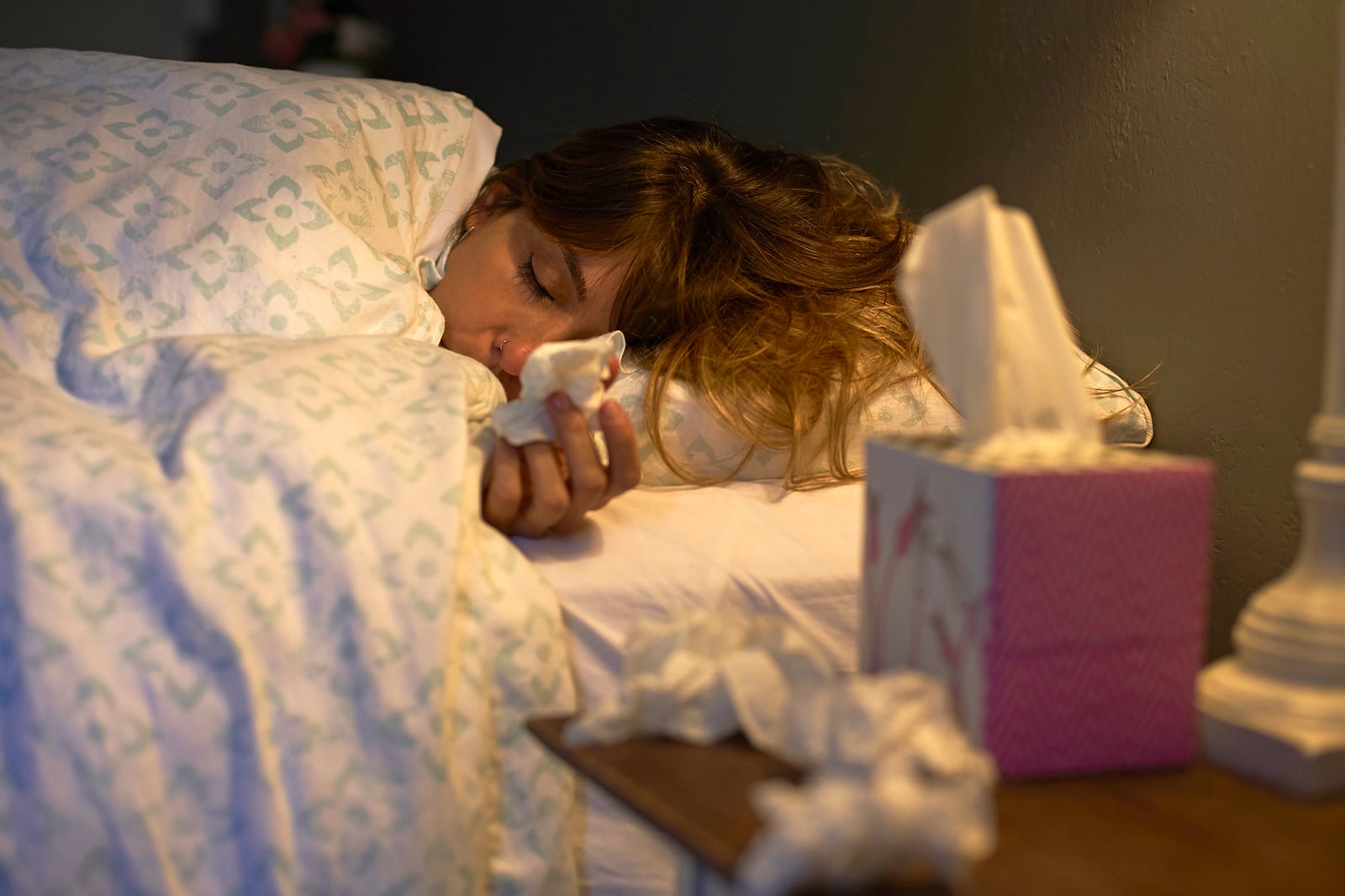
If you do have the flu, Martinello recommends staying home for at least three days, or being without a fever for at least 24 hours, though three days is the lighter end of the spectrum. If you’re super sick, it’s not unusual for recovery to take up to a week before you start feeling up to your routine.
In the meantime, Martinello suggests picking up protective masks to avoid getting sick and to slow the spread of viruses: “We do know that masks are helpful, [and] we remain enthusiastic about wearing them.”
Unlock a year of full access to The Looker and The Daily Beast for $35.
AnnualSave 48%
- Discounted annual rate
- Access to all articles (web + app)
- Ad-free exclusive newsletters
- Commenting Access
- Daily crossword
- Sneak peek of launches & events
Monthly
- Access to all articles (web + app)
- Ad-free exclusive newsletters
- Commenting Access
- Daily crossword
- Sneak peek of launches & events
Ad-Free
- Premium ad-free reading
- Access to all articles (web + app)
- Ad-free exclusive newsletters
- Commenting Access
- Daily crossword
- Sneak peek of launches & events
Looks like you already have a subscription!
You're all set!
Thanks for subscribing.
Register below to read this article for free or subscribe to unlock unlimited access to The Looker and The Daily Beast.
AnnualSave 48%
- Discounted annual rate
- Access to all articles (web + app)
- Ad-free exclusive newsletters
- Commenting Access
- Daily crossword
- Sneak peek of launches & events
Monthly
- Access to all articles (web + app)
- Ad-free exclusive newsletters
- Commenting Access
- Daily crossword
- Sneak peek of launches & events
Ad-Free
- Premium ad-free reading
- Access to all articles (web + app)
- Ad-free exclusive newsletters
- Commenting Access
- Daily crossword
- Sneak peek of launches & events
Already have an account? Sign In
Looks like you already have a subscription!
You're all set!
Thanks for subscribing.
Sign in
Login dialog