Doctors Sound Alarm Over Viral ‘Tanmaxxing’ Craze
“It’s sun damage packaged as a beauty hack.”


Carl & Ann Purcell/Getty Images
A growing social media craze known as “tanmaxxing” is causing concern among dermatologists, who fear that the trend is little more than intentional sun damage.
Tanmaxxing, a term riffing on the Gen-Z “looksmaxxing” trend, encourages users to chase the darkest tan possible through any means necessary: Spending excessive time in direct sunlight, tracking peak UV hours, and skipping sun protection.
In some cases, followers resort to lying in tanning beds, once considered a relic of the 1980s, 1990s, and 2000s.
While influencers portray the practice as the key to achieving a perfect summer glow, dermatologists warn against it.
“It’s sun damage packaged as a beauty hack,” Dr. Silvina Pugliese, a clinical associate professor of dermatology at NYU Langone Health, told News 12.
Get a First Look
Sign up to receive news and updates from The Looker
By clicking "Sign Up" you agree to our Terms of Use and Privacy Policy.
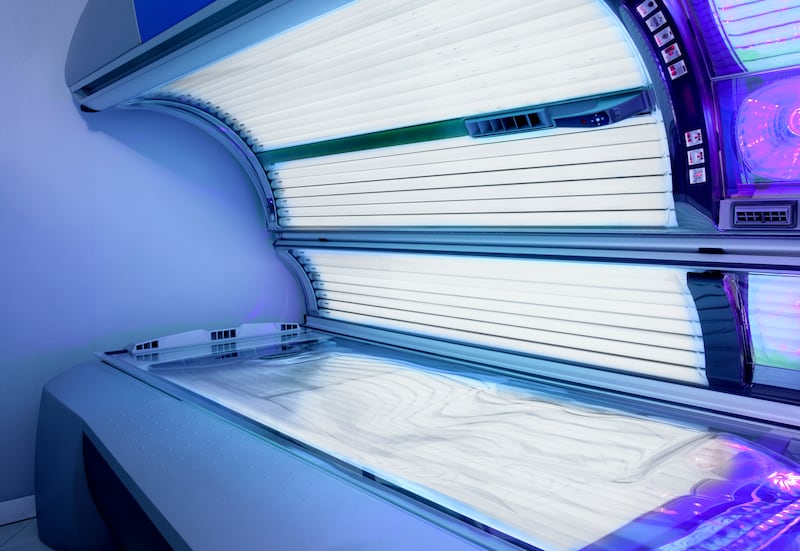
Image of Tanning Bed
Peter Dazeley/Getty Images
Repeated ultraviolet exposure doesn’t just increase the risk of skin cancer, she said—it can also speed up premature aging, leading to wrinkles and other lasting cellular damage.
Doctors at NYU Langone report seeing more patients with unusually deep tans arriving for routine skin exams—a trend they believe may be linked to the growing popularity of so-called “tanmaxxing.”
Pugliese suggested that the long, freezing winter of 2025–2026 may have led more people to spend extended periods outdoors once temperatures finally warmed.
But while a golden glow from the sun may be trendy in 2026, the havoc it can wreak on your skin is forever.
Jessica Saggio, a Long Island nurse, told News 12 that she once embraced many of the same habits social media users are now promoting online: using tanning oil, spending hours by the pool or at the beach, and repositioning herself to maximize her sun exposure.
In nursing school, however, Saggio learned about the risks of UV damage and began to rethink the potential harm of such habits.

Still, while spending hours in direct sunlight can be dangerous, you do not need to spend the summer indoors to protect yourself.
The American Academy of Dermatology (AAD) recommends applying a water-resistant sunscreen that offers broad-spectrum protection (SPF 30 or higher) about 15 minutes before heading outside and reapplying it every two hours.
The AAD also encourages limiting prolonged exposure during peak sunlight (between 10 a.m. and 2 p.m.) and avoiding tanning beds altogether.
Unlock a year of full access to The Looker and The Daily Beast for $35.
AnnualSave 47%
- Discounted annual rate
- Access to all articles (web + app)
- Ad-free exclusive newsletters
- Commenting Access
- Daily crossword
- Sneak peek of launches & events
Monthly
- Access to all articles (web + app)
- Ad-free exclusive newsletters
- Commenting Access
- Daily crossword
- Sneak peek of launches & events
Ad-Free
- Premium ad-free reading
- Access to all articles (web + app)
- Ad-free exclusive newsletters
- Commenting Access
- Daily crossword
- Sneak peek of launches & events
Looks like you already have a subscription!
You're all set!
Thanks for subscribing.
Register below to read this article for free or subscribe to unlock unlimited access to The Looker and The Daily Beast.
AnnualSave 47%
- Discounted annual rate
- Access to all articles (web + app)
- Ad-free exclusive newsletters
- Commenting Access
- Daily crossword
- Sneak peek of launches & events
Monthly
- Access to all articles (web + app)
- Ad-free exclusive newsletters
- Commenting Access
- Daily crossword
- Sneak peek of launches & events
Ad-Free
- Premium ad-free reading
- Access to all articles (web + app)
- Ad-free exclusive newsletters
- Commenting Access
- Daily crossword
- Sneak peek of launches & events
Already have an account? Sign In
Looks like you already have a subscription!
You're all set!
Thanks for subscribing.
Sign in
Login dialog
Loading comments…