This Is Why You Keep Getting Dandruff, No Matter What You Do
Put the blow-dryer down and back away slowly.


Photo Illustration by Thomas Levinson/The Daily Beast/Getty
As the weather gets colder, outerwear moves to the front of our wardrobes. Unfortunately, little white dandruff specks are usually quick to follow. These pesky flakes crop up along the shoulders of our favorite black sweaters, necessitating nonstop lint-roller vigilance.
If you struggle with the bodily equivalent of glitter every winter, you’re not alone: Google Trends shows an increase in searches related to dandruff throughout 2025’s fall months. While this unwanted adornment can occur at any time of year, it often worsens in winter due to increased indoor heating and reduced air moisture.
Whether you’ve tried a half-dozen treatments already or are searching for a serum for your first-time scalp flakes, you should consider making other lifestyle changes, too. To find out what’s behind the head-scratching concern and how to fix it, we consulted Dr. Ariel Ostad, a board-certified dermatologist in New York City, who gave us a rundown on the dos and don’ts of dealing with dandruff.
Mistake #1: You’re not washing your hair enough.
Not washing your hair frequently enough can feed the yeast that causes dandruff. Malassezia (a yeast-like, dandruff-causing fungus) loves to feast on the dead skin cells and oily sebum that accumulate in your hair when you don’t suds up regularly enough.
Get a First Look
Sign up to receive news and updates from The Looker
By clicking "Sign Up" you agree to our Terms of Use and Privacy Policy.
While it’s fine to have a day or two between cleanses, Ostad says he sees people who don’t wash their hair for a week at a time, with some going up to 10 days between shampoos. During those week-long stretches, their hair and scalps can build up with oil, dirt, and dead skin.
The fix: Wash your hair every other day with a gentle shampoo or an anti-dandruff shampoo to help treat itching and flaking. If over-the-counter products aren’t doing the trick, consult a dermatologist for recommendations tailored to your needs.
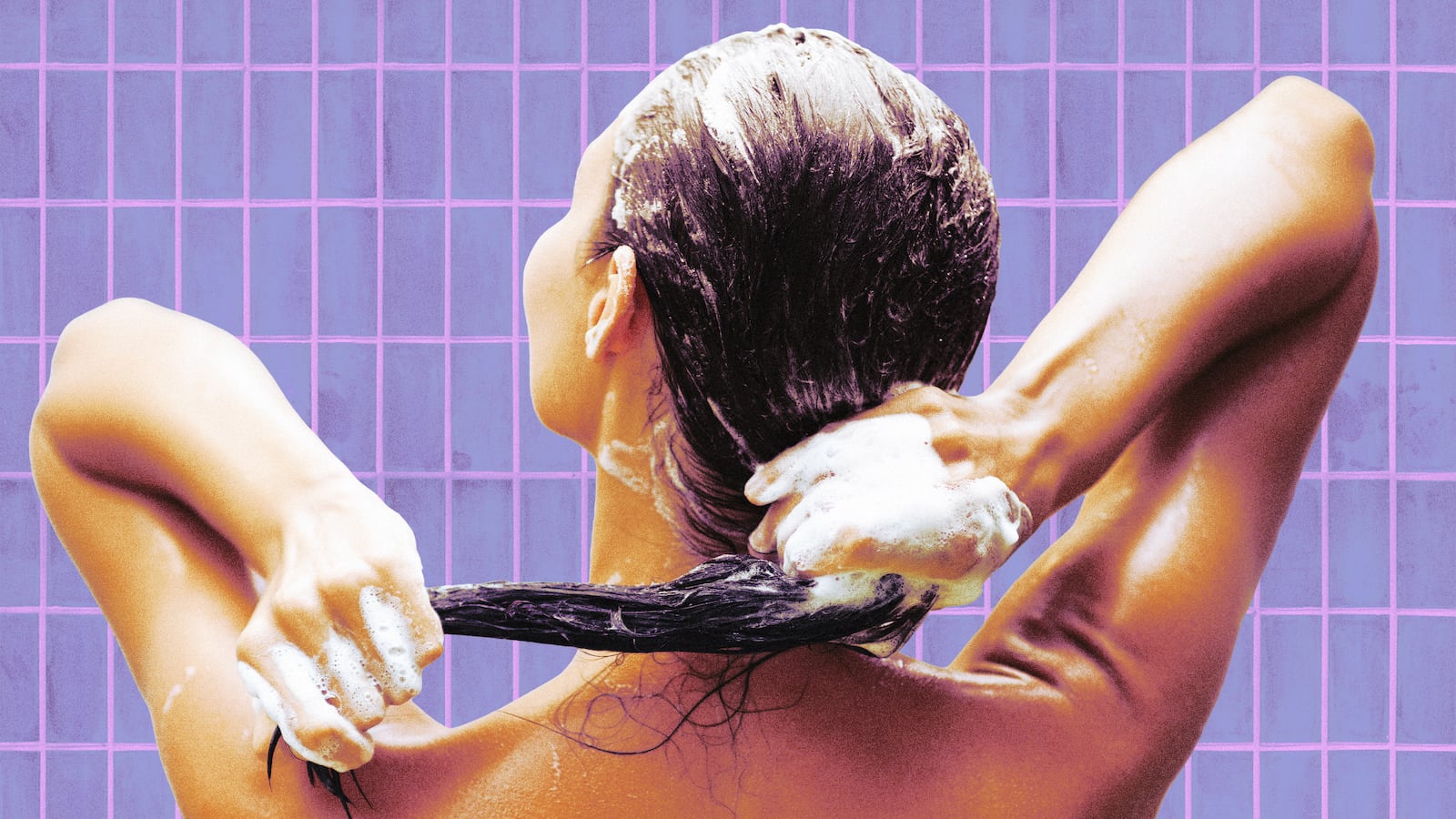
A photo illustration of a woman washing her hair.
Photo Illustration by Thomas Levinson/The Daily Beast/Getty
Ostad says over-the-counter versions can be picked up without a prescription and can be effective, but prescription formulas may work even better in extreme cases.
Mistake #2: You’re using products that strip the scalp or wash too much moisture away.
If the word “fungus” makes you want to sprint to your shower and use every cleanser you’ve got, let’s take a pause first. Unfortunately, swinging the pendulum too far in the other direction can be detrimental to your fight against flakes, as well.
If you’re washing too aggressively with harsh shampoos, super-fragrant soaps, or alcohol-based products, you can sometimes strip your scalp of moisture. This can trigger inflammation and irritation, thereby worsening dandruff.
The fix: Reach for lightweight haircare products formulated for sensitive scalps. Also, make sure to nourish and moisturize your scalp.

A photo illustration of a woman using hairspray.
Photo Illustration by Thomas Levinson/The Daily Beast/Getty
If you don’t moisturize or hydrate your scalp, it’s going to get aggravated, Ostad says. He recommends putting olive oil (the kind you use to cook is fine, he says, you don’t need anything fancy), once or twice a week, before you shampoo and condition.
Mistake #3: You’re too stressed out.
Ostad’s patients often insist their dandruff goes away the moment they go on vacation, only to return within a day or two of getting back home. These folks usually attribute their temporary flake-free status to the destination itself, and that something about the water or even the weather at home is triggering their dandruff.
In reality, Ostad says, the issue is that “you’re back to work, and work is stressful.” Stress causes our bodies to produce cortisol, which, in turn, can trigger inflammation that worsens dandruff.
The fix: Take a trip, if it’s feasible! Sadly, this isn’t always the case, so if you can’t drive off into the sunset or fly to another part of the world, we suggest simply relaxing and taking proper care of your body. Prioritize sleep and practice stress management, like exercise and meditation.

A photo illustration of a woman on vacation.
Photo Illustration by Thomas Levinson/The Daily Beast/Getty
Mistake #4: You’re scratching it too hard.
It is, of course, tempting to itch something itchy. Remember, though, that your scalp is just like the rest of your skin. You wouldn’t scratch one spot on your forearm for hours on end and expect it to be totally fine, smooth, and healthy immediately afterward.
Ostad says he also sees this in people who tend to be rough when blow-drying their hair. While the goal of great hair is a noble and understandable one, when you manipulate your roots with abandon, your scalp can pay the price.
Whether you’re scratching too much or using aggressive heat-styling techniques, the resulting inflammation can worsen scaling and aggravate dandruff.
The fix: Treat your scalp like the rest of your body—or, even better, how you treat the skin on your face. If you must touch your scalp to apply treatments or medication, or to blow-dry your strands, just be gentle. Make sure your nails are trimmed and filed, says Ostad, and use only your finger pads to rub the product in gently.
The Bottom Line
While haircare products can be highly effective in the anti-flake fight, it’s essential to look beyond the beauty aisle for solutions. If you’ve made lifestyle changes and tried OTC treatments but the flaking and itching persist, or if you have any existing skincare or health conditions that could contribute to the problem, consult a dermatologist or your primary care physician for professional guidance.
The New Year's Sale is here! $35 unlocks this article and a year of full access to The Looker and The Daily Beast.
AnnualSave 48%
- Discounted annual rate
- Access to all articles (web + app)
- Ad-free exclusive newsletters
- Commenting Access
- Daily crossword
- Sneak peek of launches & events
Monthly
- Access to all articles (web + app)
- Ad-free exclusive newsletters
- Commenting Access
- Daily crossword
- Sneak peek of launches & events
Ad-Free
- Premium ad-free reading
- Access to all articles (web + app)
- Ad-free exclusive newsletters
- Commenting Access
- Daily crossword
- Sneak peek of launches & events
Looks like you already have a subscription!
You're all set!
Thanks for subscribing.
Register below to read this article for free or subscribe to unlock unlimited access to The Looker and The Daily Beast.
AnnualSave 48%
- Discounted annual rate
- Access to all articles (web + app)
- Ad-free exclusive newsletters
- Commenting Access
- Daily crossword
- Sneak peek of launches & events
Monthly
- Access to all articles (web + app)
- Ad-free exclusive newsletters
- Commenting Access
- Daily crossword
- Sneak peek of launches & events
Ad-Free
- Premium ad-free reading
- Access to all articles (web + app)
- Ad-free exclusive newsletters
- Commenting Access
- Daily crossword
- Sneak peek of launches & events
Already have an account? Sign In
Looks like you already have a subscription!
You're all set!
Thanks for subscribing.
Sign in
Login dialog